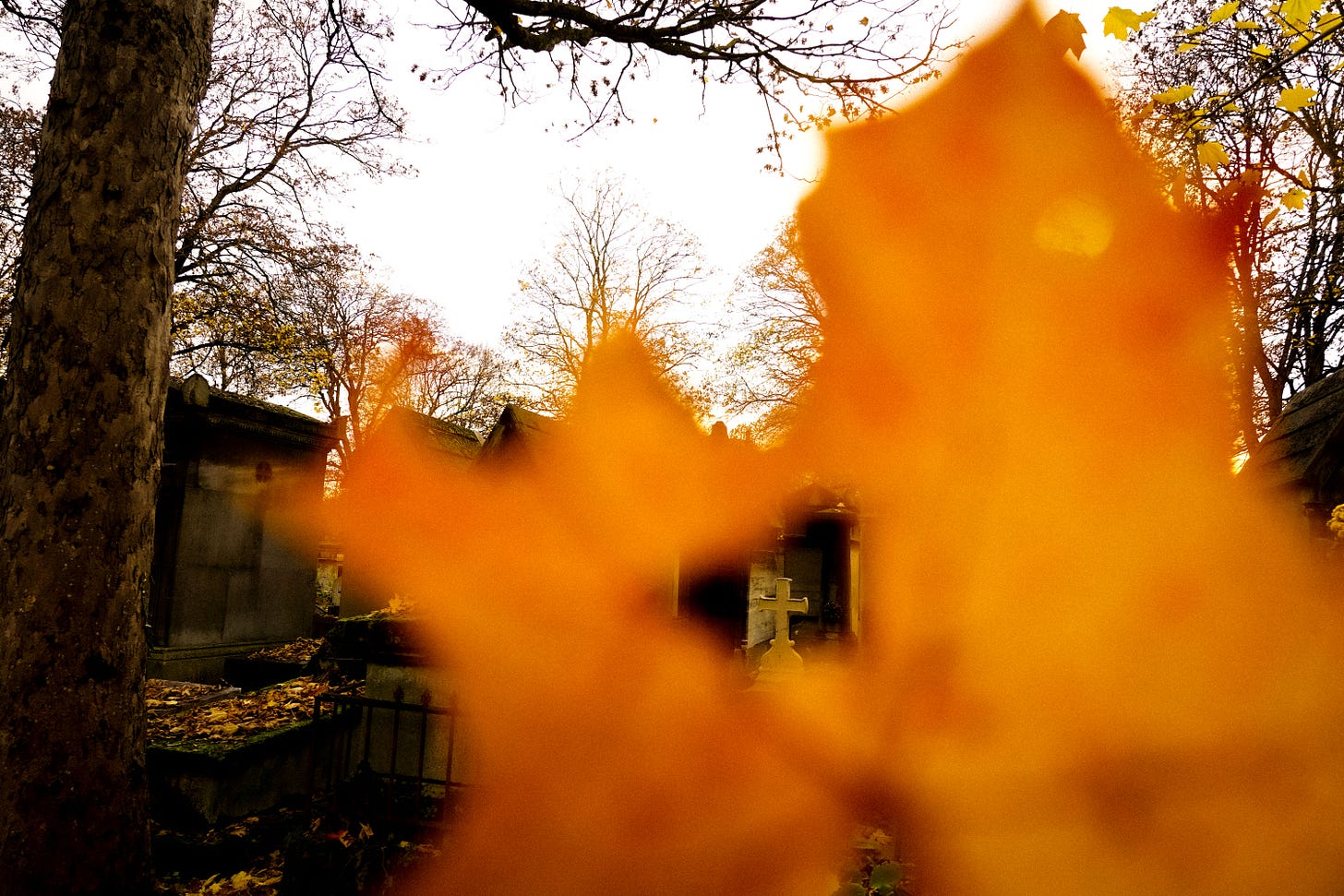
A November walk through the Père Lachaise cemetery in Paris
November 2024 · Paris, France
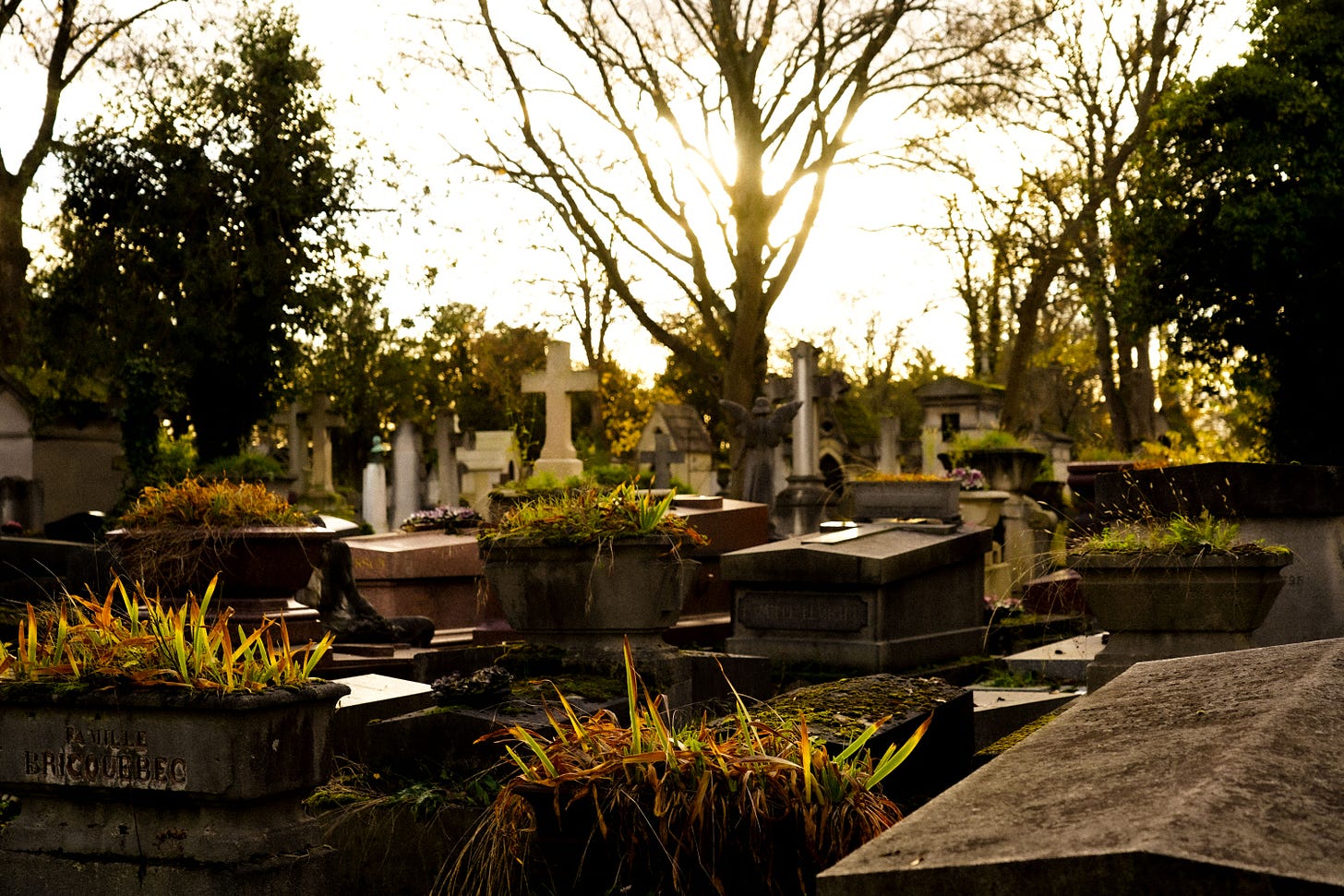
In Paris, November is a mixture of crisp air filled with rain and candied chestnuts. Gloomy trees sulk with their last remaining pieces of fall colors, and the first few sparkly days of marchés de Noël begin. The afternoons are slower, still, hesitant… a deep breath before the upcoming holiday chaos. And the early sunsets create the perfect golden light for a 4:00pm pilgrimage to the grave of Frédéric Chopin (composer of étude op. 10 no. 3 in e major and nocturne no. 19 in e minor). Did you know his heart is buried in Warsaw? A few steps away, unnamed headstones are constricted by twisting branches.
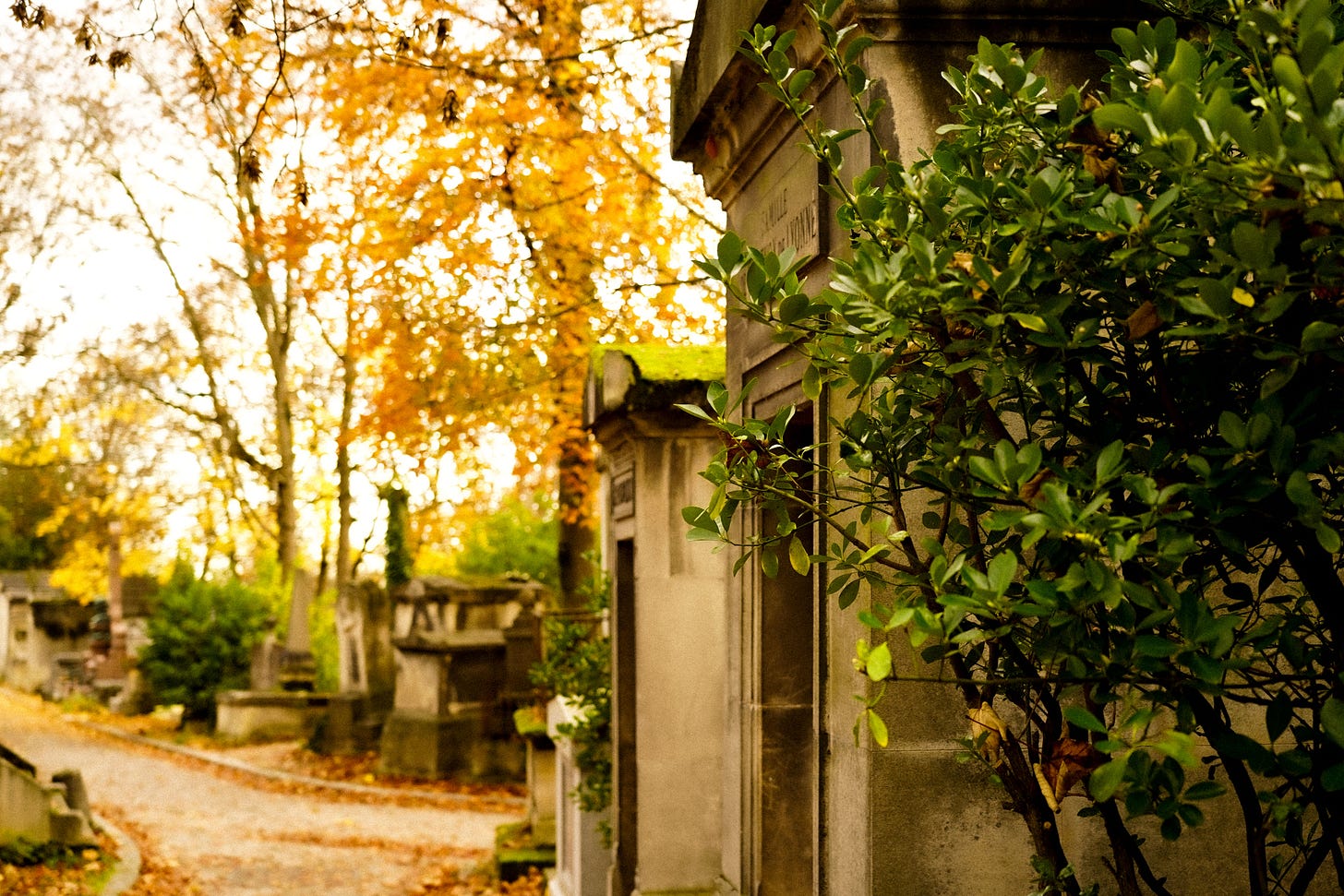
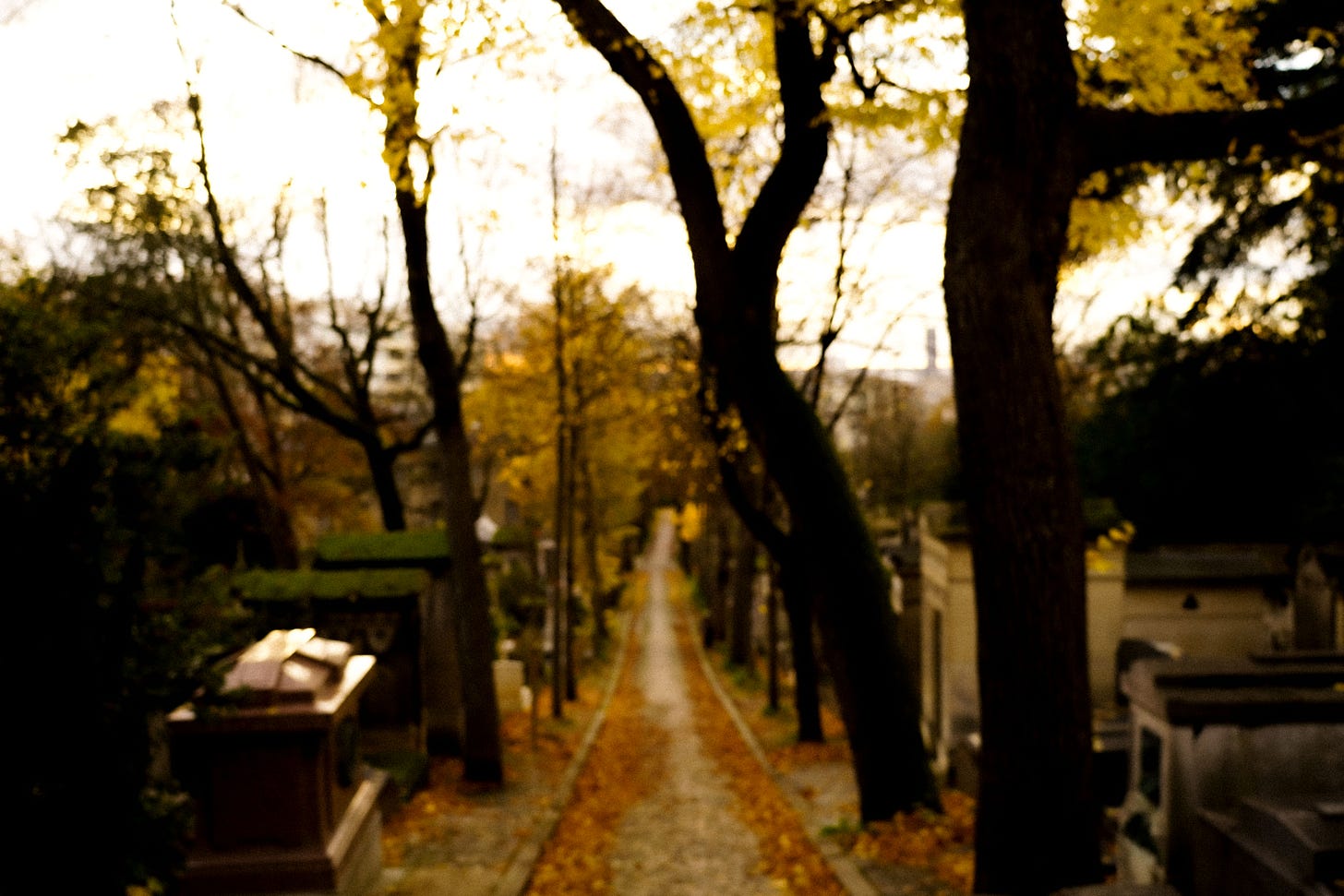
It's easy to get lost in Le Cimetière du Père Lachaise. Even Bus 69, which we took after a lazy morning well spent at Marché des Enfants Rouges, and which was filled with chaotic laughter of what I think was a German middle school group, had multiple quiet pauses along the left solemn stone walls. One could easily get lost without a map or a plan. The visitors are quiet, but the birds and the leaf rustling and occasional raindrops are loud.
The first scene that comes to mind is Godric's Hollow, and how Alexandre Desplat perfectly captured the pain of loss and the fear of the unknown, even when the warmth of the holiday season is right around the corner. That reminds me of November 2020, when Covid-19 was at its peak in California, and I took long, early evening walks around campus listening to Evermore and feeling scared. I don't think I ever fully processed the pandemic. Ages ago in France, potatoes were thought to give people the plague. Antoine-Augustin Parmentier, a pharmacist who popularized potatoes and is mistakenly thought to have invented the french fry, is buried at Père Lachaise. People bring potatoes to his grave.
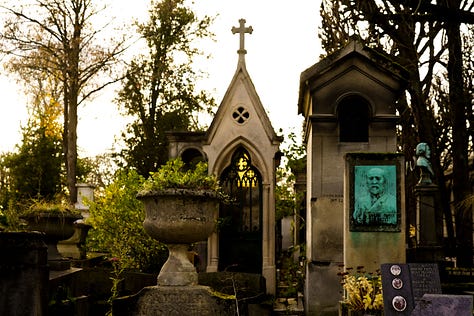
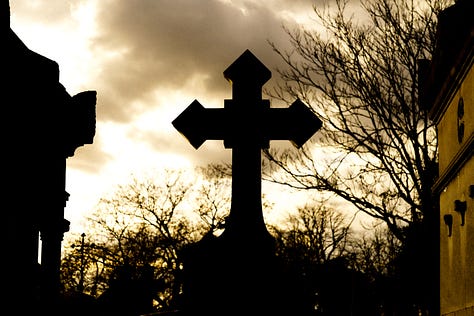
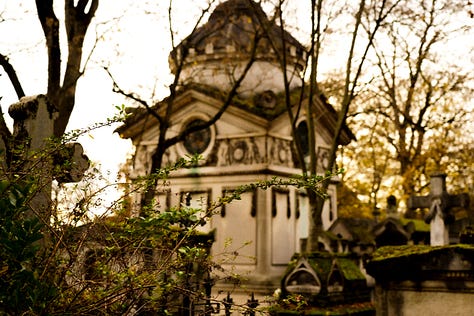
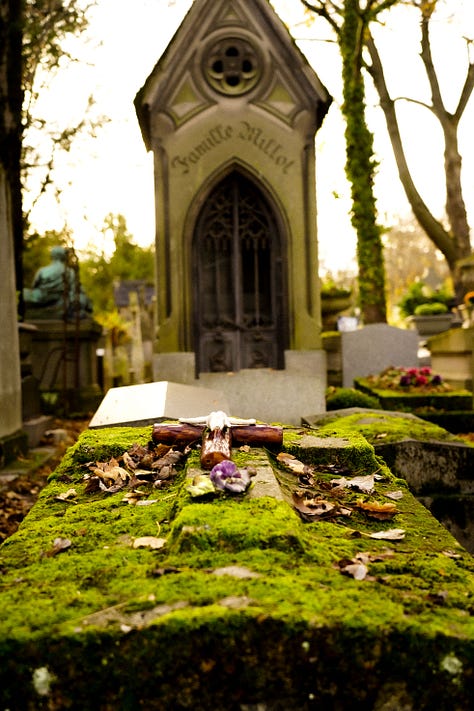
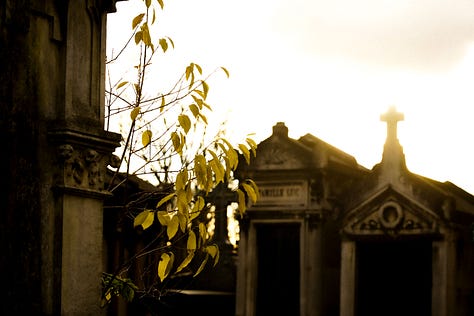
The second scene that comes to mind is a September walk in Reykjavík. The sun was setting early, and the streets were damp and quiet. This was ages ago, before the tourist boom in Iceland. It was my first time exploring a city solo. As a Californian, I'm not used to that kind of chill in the air. I was scared and lonely until stumbling into the Hallgrímskirkja, which wasn't necessarily comforting visually (it's actually quite frightening architecturally), but because it's a place where people gather together. Similarly, while I am unsettled navigating a labyrinth of tombstones, I am comforted by the carefully tended graves, the rose petals and candles, and the intricately carved names.
The third scene that comes to mind is the Quinault Rainforest. I've never heard a more beautiful orchestra than a storm in Olympic National Park! Each raindrop lands with satisfaction and music. Some fall down onto little pools of water on the ground like bells, some fall down onto strong leaves of evergreen Fir trees like cymbals, some fall down onto moss like a soft mallet hitting a marimba. The rain is the entire percussion section!
The air gets crisper and my fingers inside my gloves are numb.
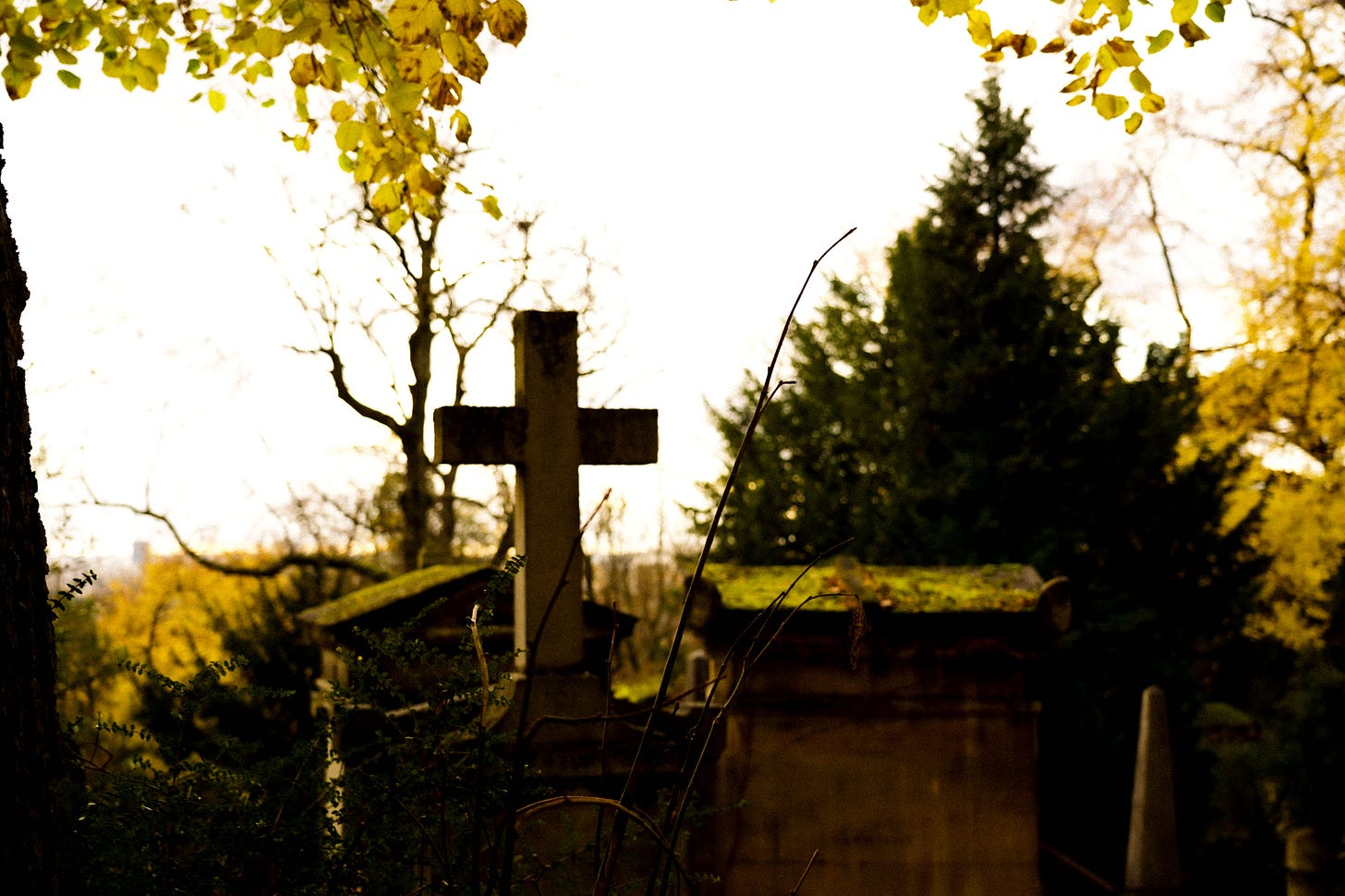
I think about the most beautiful Autumn colors I've ever seen. Seattle? Boston? Even in Los Angeles, in the San Fernando Valley, there are quiet little streets that become lined with gold.
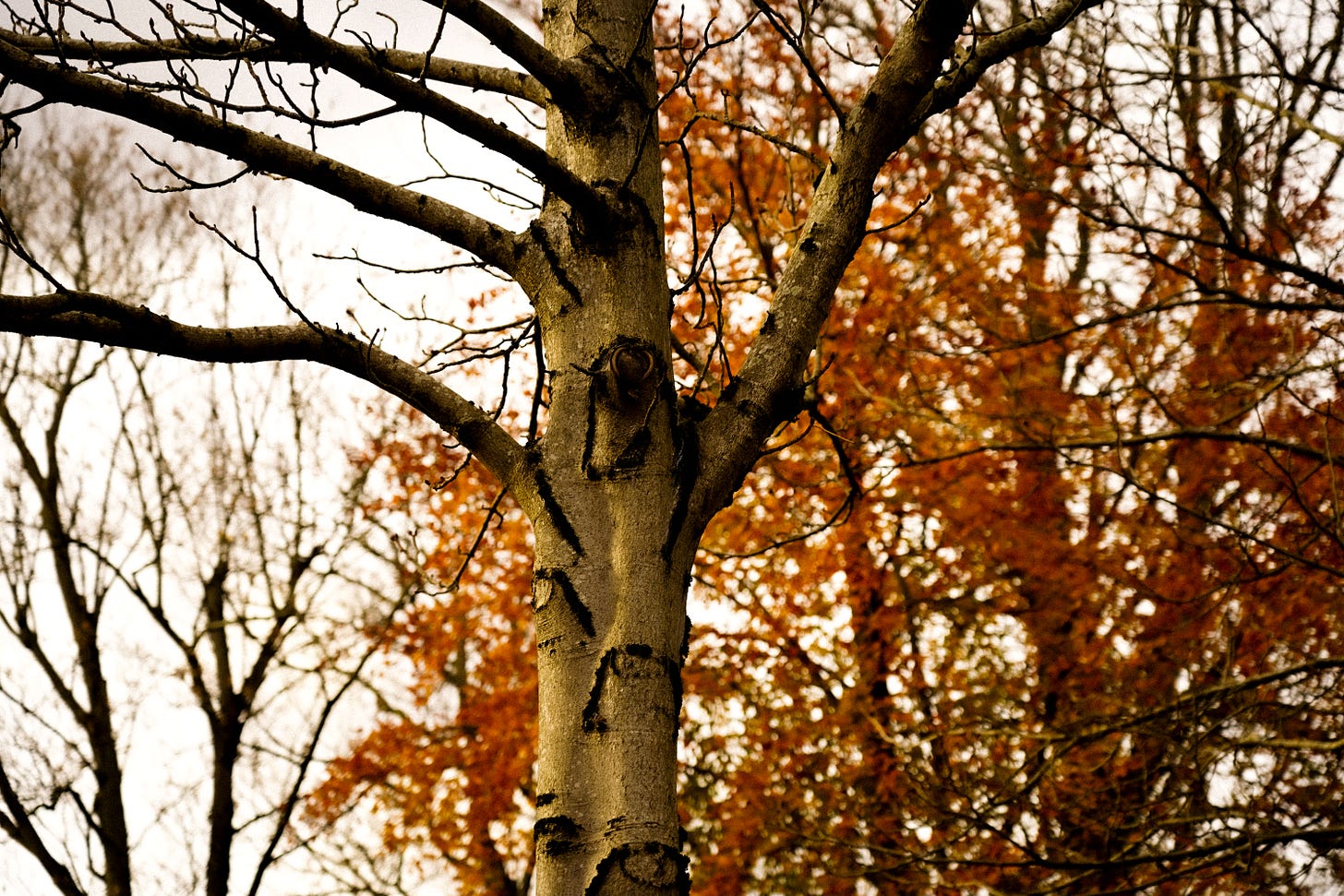
One of my most recurring nightmares are when the scars on trees, like birch trees, gradually transform into eyes.
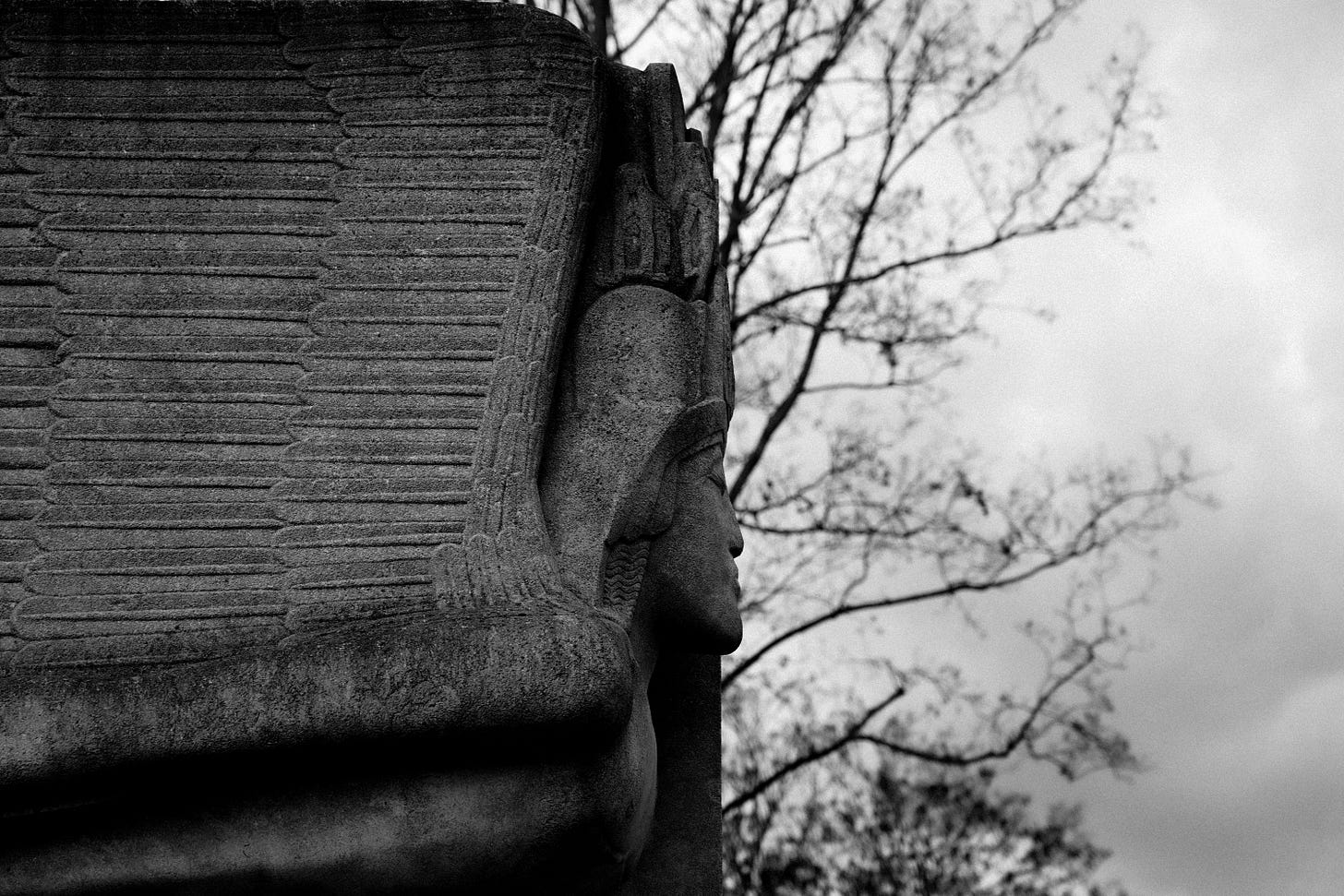
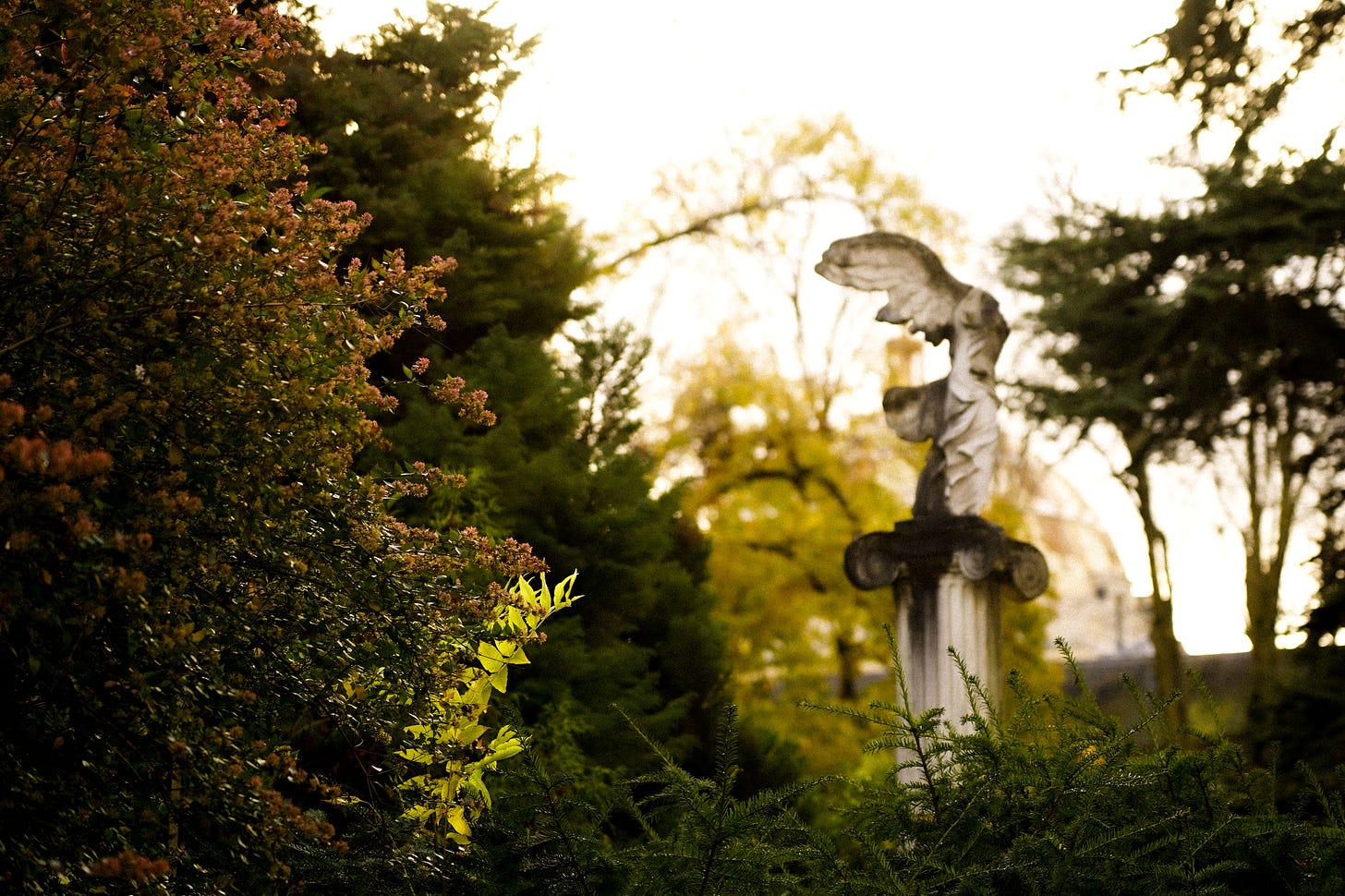
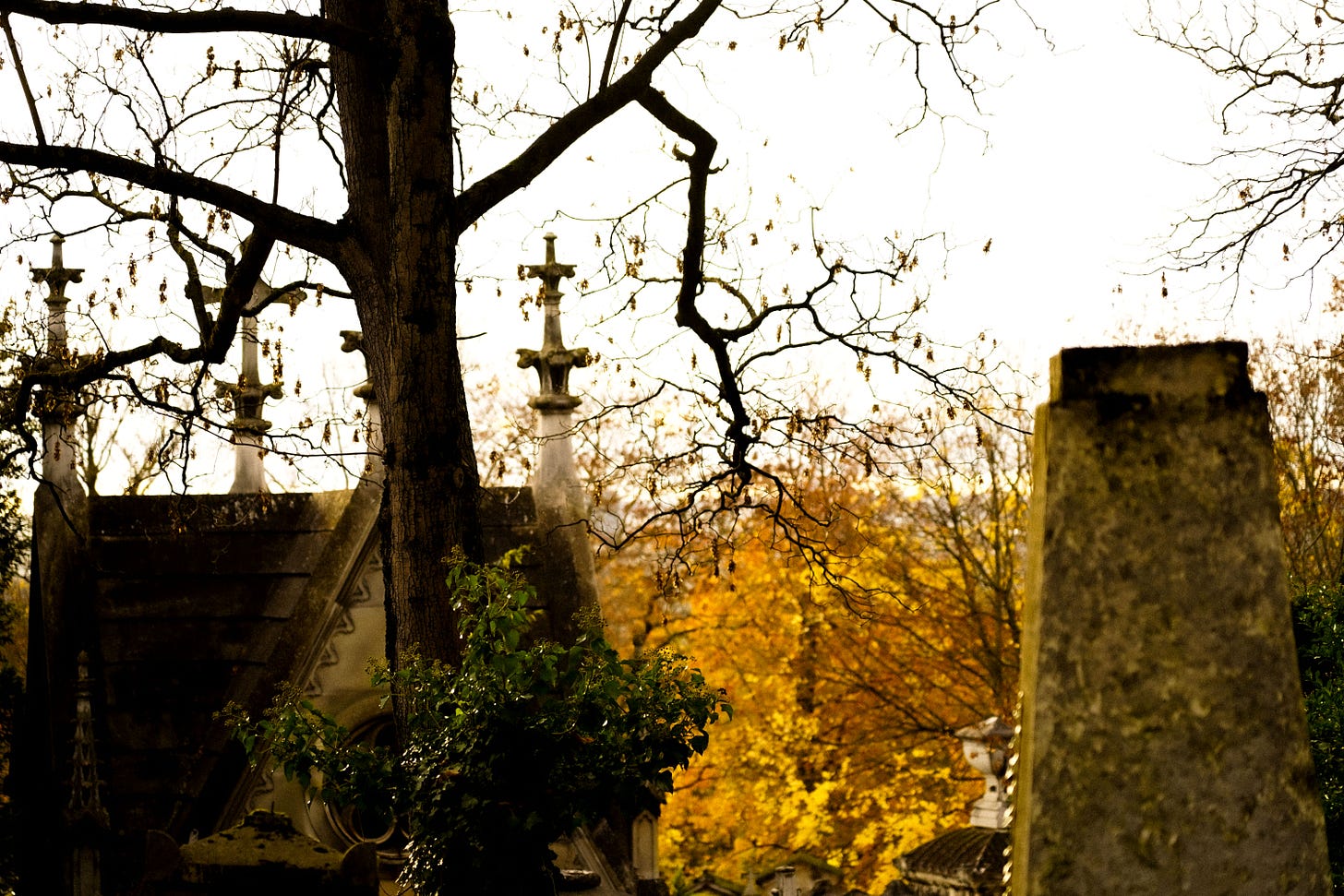
Père Lachaise is filled with beautiful marble sculptures, and I feel like I am actually walking in a museum set within a forest.
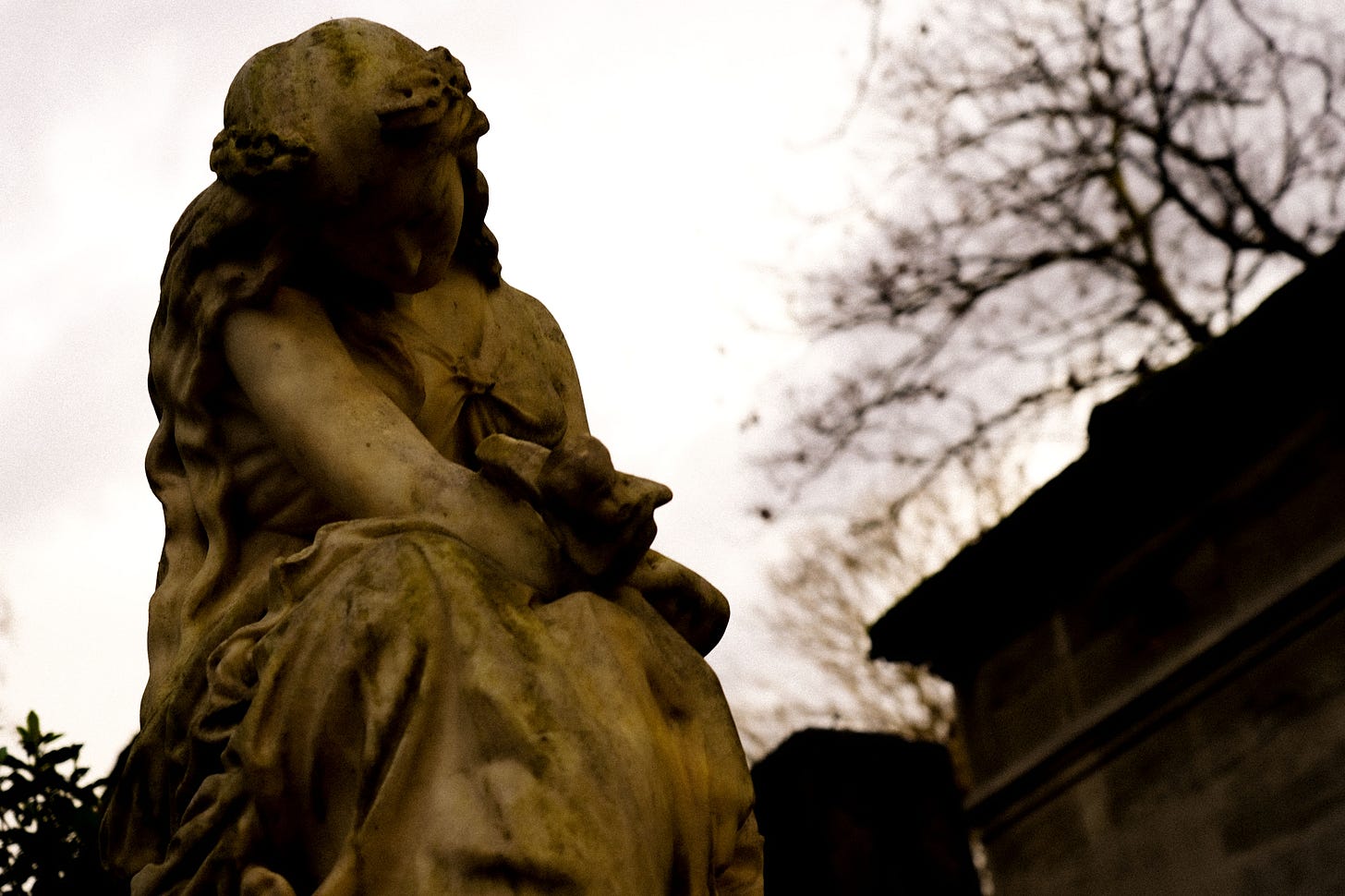
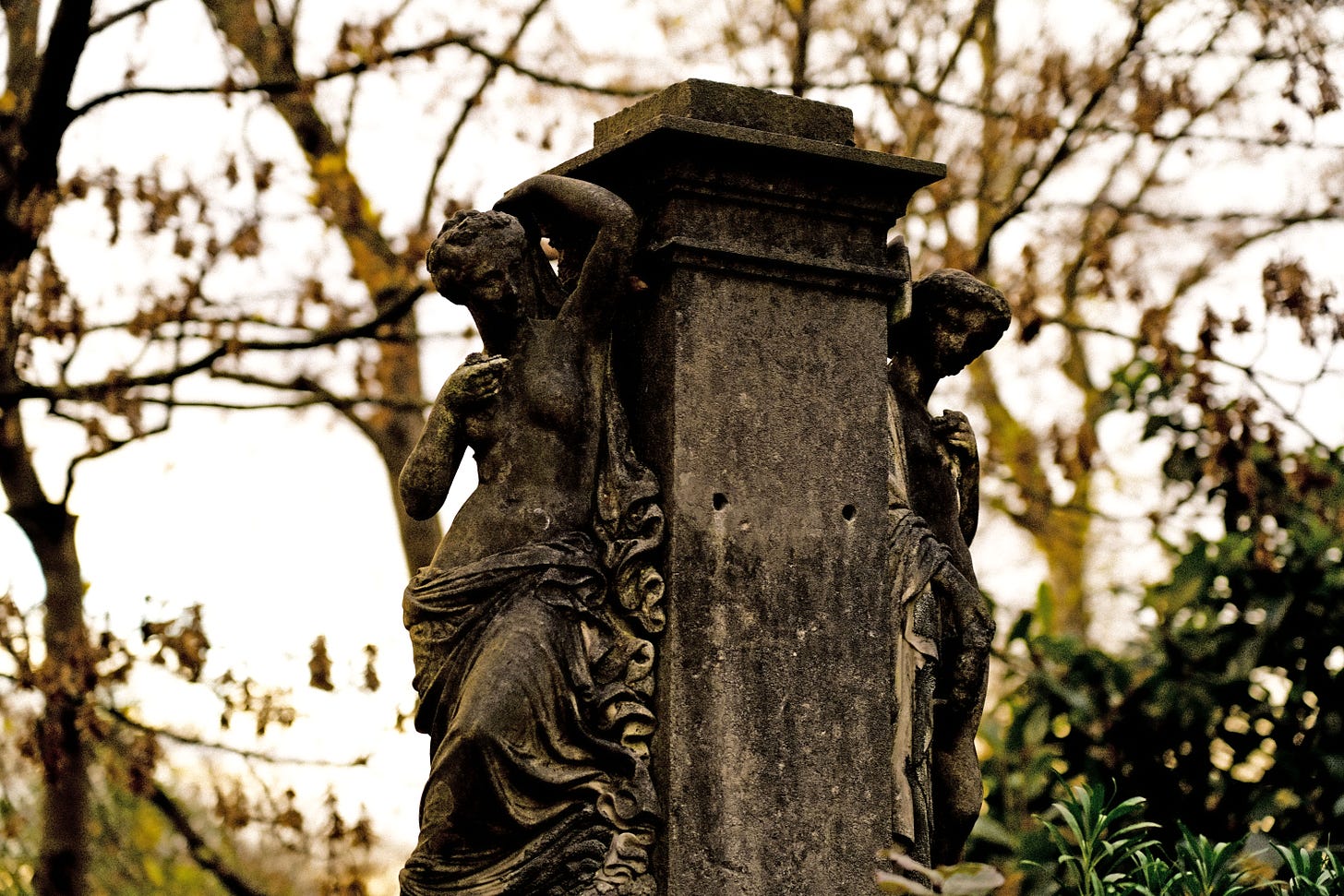
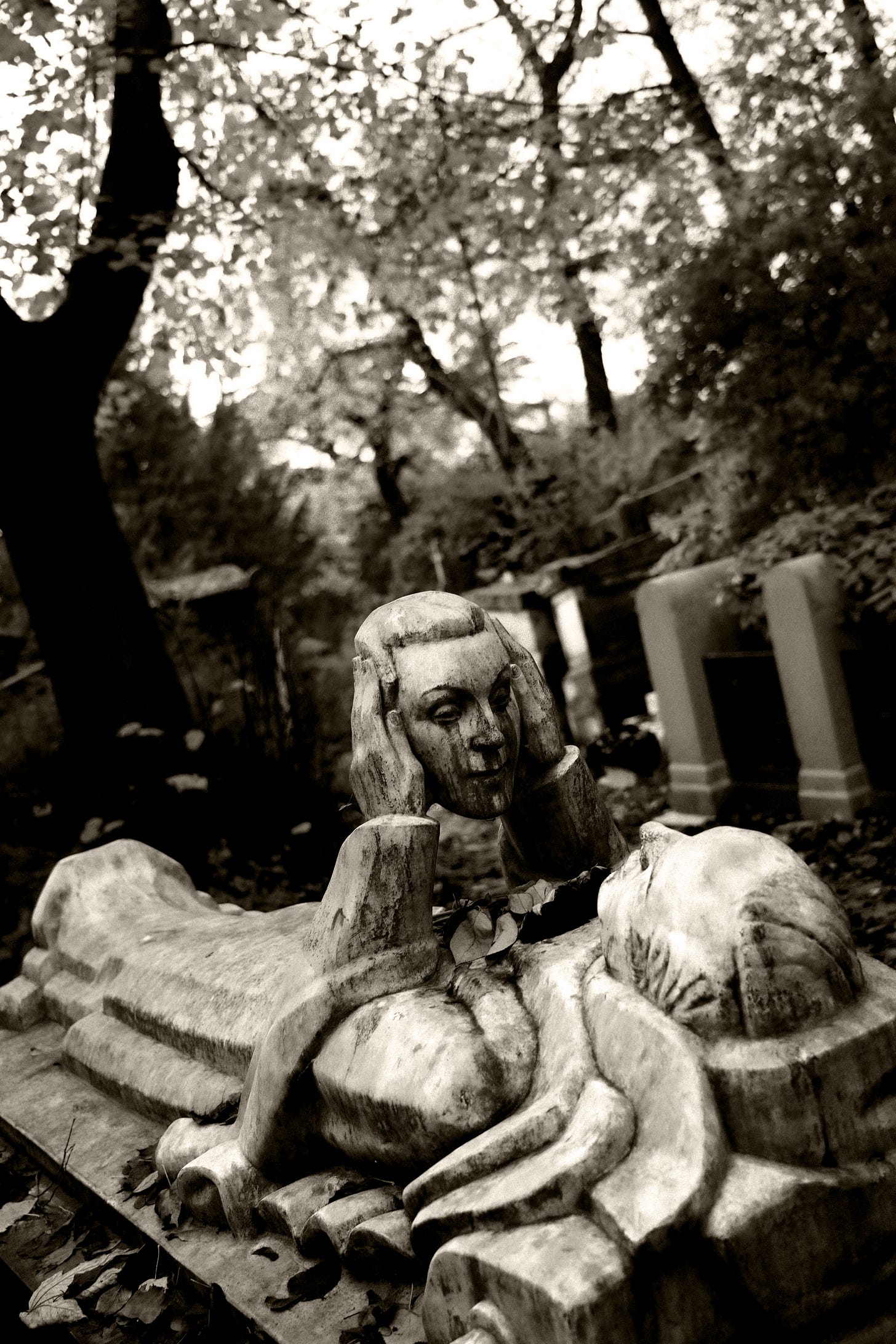
Fernand Arbelot (1880–1942) was a musician, artist, and architect, who wanted to be buried forever gazing into his wife's face.
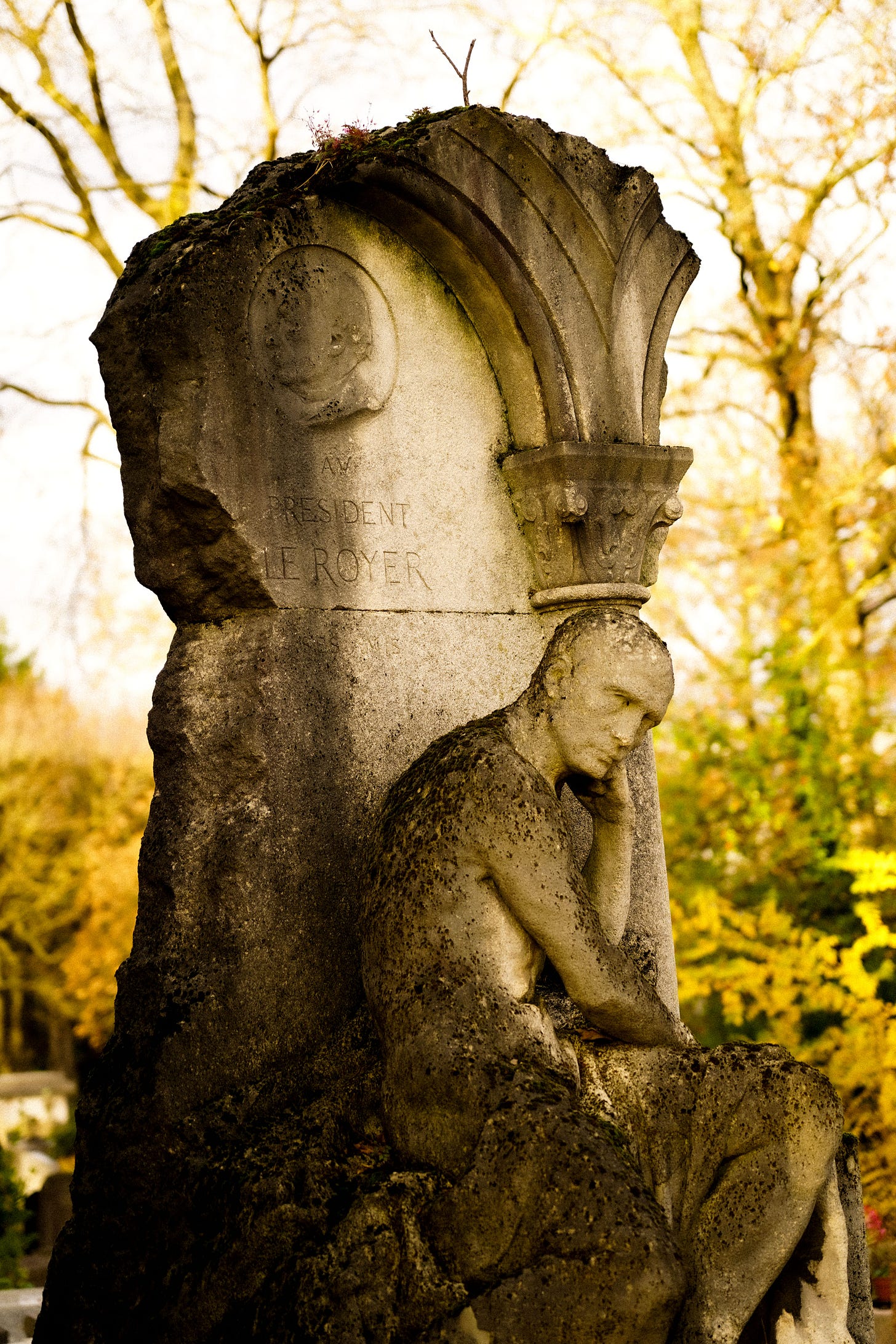
Philippe Élie Le Royer (1816–1897) was once the president of the French Senate, representing the French Left.
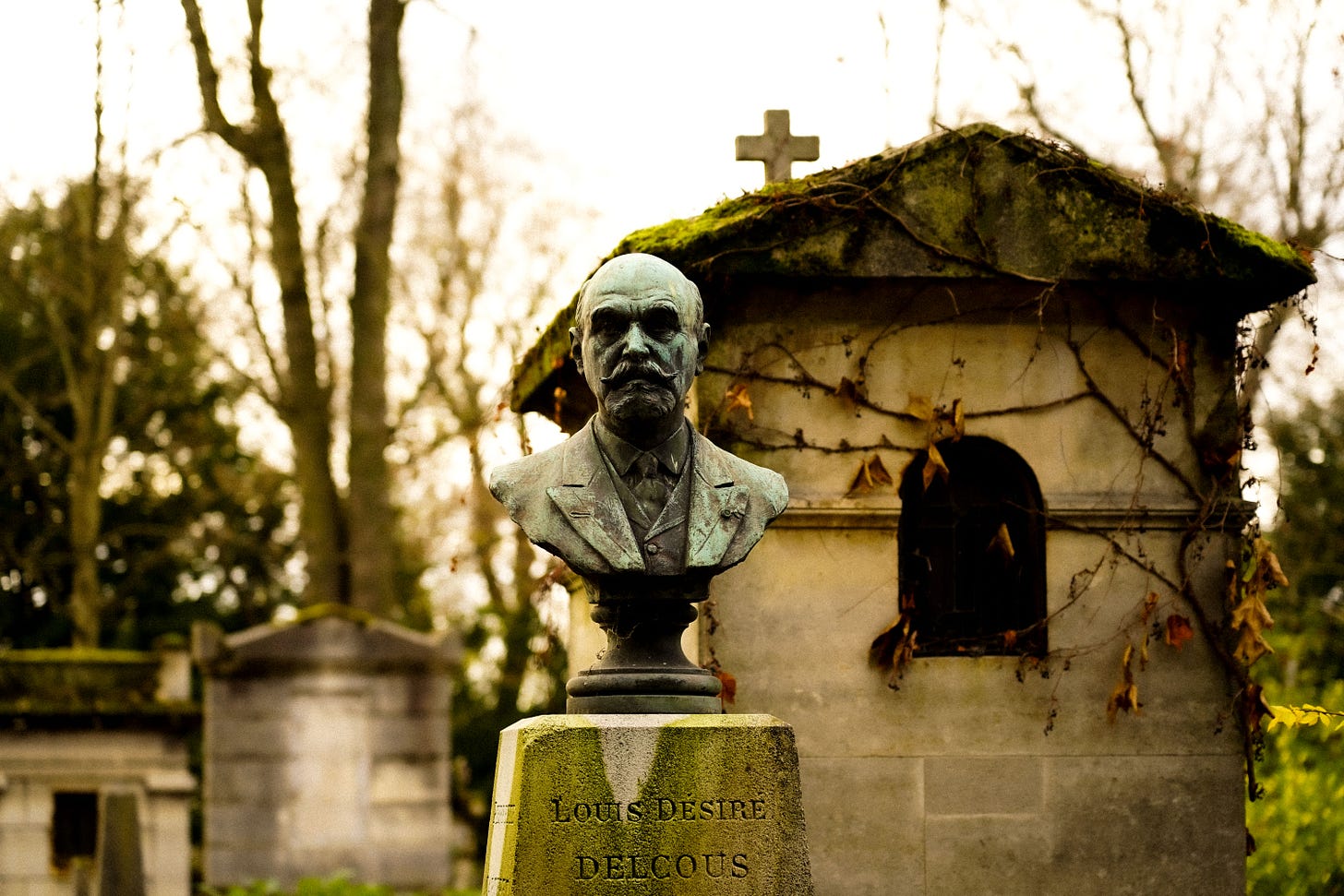
Louis-Désiré Delcous (1847–1931) was a wine merchant, and an honorary secretary general of the Union of Wholesale Trade of Wines of the Seine.
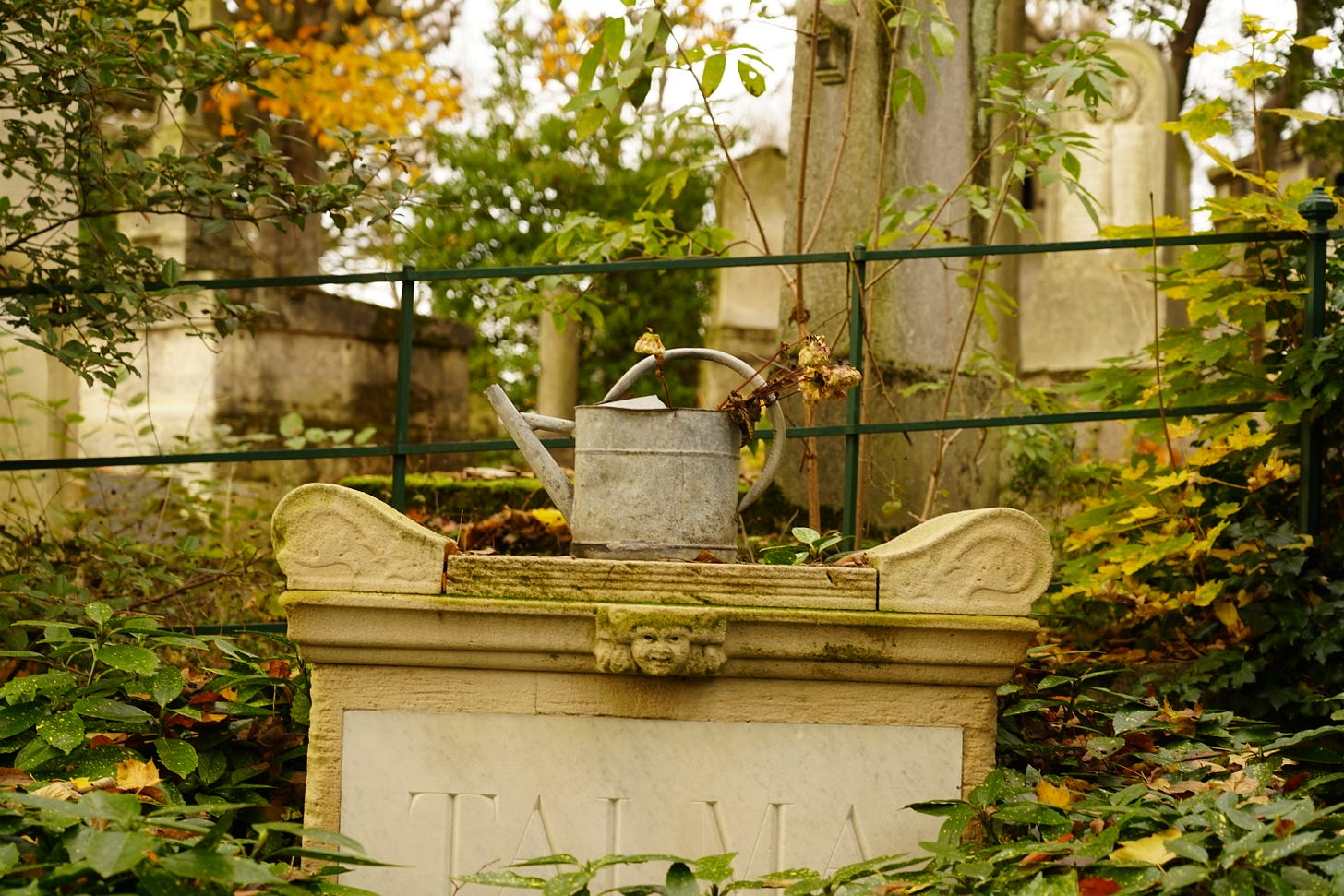
François-Joseph Talma (1763–1826) was an actor whose big debut was in Voltaire's tragedy Mahomet, a play that is still controversial.
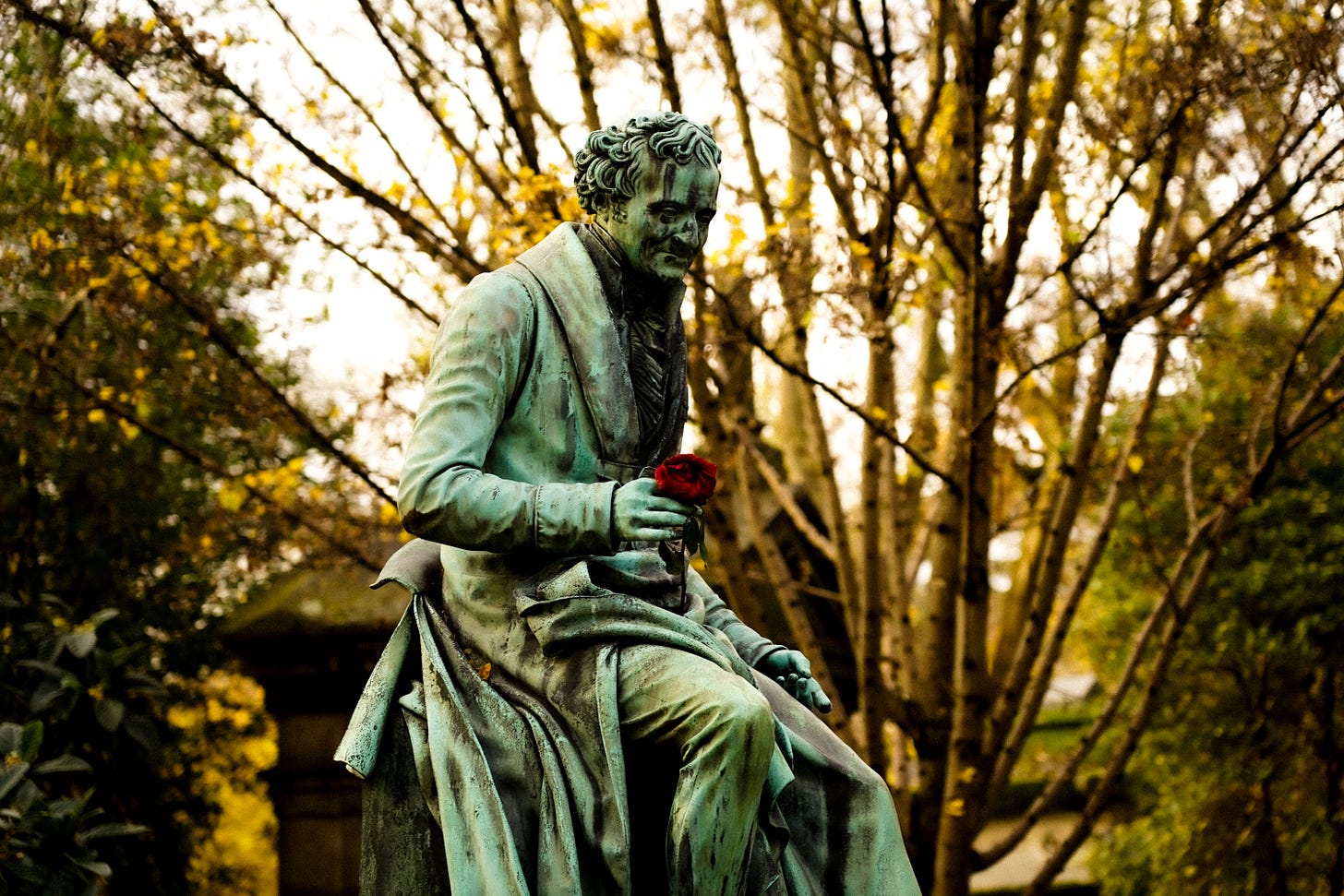
Vivant Denon (1747–1825) was an artist, writer, and archaeologist, who gave up his law profession when he realized his preference for art, and subsequently wrote Voyage dans la basse et la haute Égypte.
And then there was Oscar Wilde (1854–1900). An Irish playwright, poet, and writer, buried in Paris after exile. Looming above already dramatic neoclassical chapels the size of telephone booths is his tomb with the epitaph:
And alien tears will fill for him
Pity's long-broken urn,
For his mourners will be outcast men,
And outcasts always mourn